Science of Reading
Empowering educators with the knowledge and skills that significantly increase student reading achievement and proficiency scores with evidence-based practices.
Home » Advisory » Management Consulting » Academic Transformation » Science of Reading
Close achievement gaps and surpass expectations in students’ reading and writing proficiency.
MGT works with school districts to implement an impactful approach to literacy instruction built upon the collection of research known as The Science of Reading (SoR). MGT offers high-quality professional development courses to increase educator knowledge along with essential support services to develop district and schoolwide systems and processes to ensure implementation of SoR instructional practices. These high impact instructional practices are collectively called “Structured Literacy.” Effective Structured Literacy instruction consistently provided within the framework of a Multi-Tiered System of Support (MTSS) is the way in which MGT empowers schools and districts to meet the literacy needs of all students.
Fostering a Love for Literacy
MGT’s Science of Reading solutions engage all educational stakeholders – administrators, teachers, coaches, and reading specialists – to foster effective reading, writing, and spelling instruction. Certified by CERI, ALTA, and Orton-Gillingham, our literacy specialists collaborate with schools to design personalized implementation plans, ensuring literacy practices align with research-based methodologies and meet specific goals. These services include:
Recognized Expertise in Reading Instruction
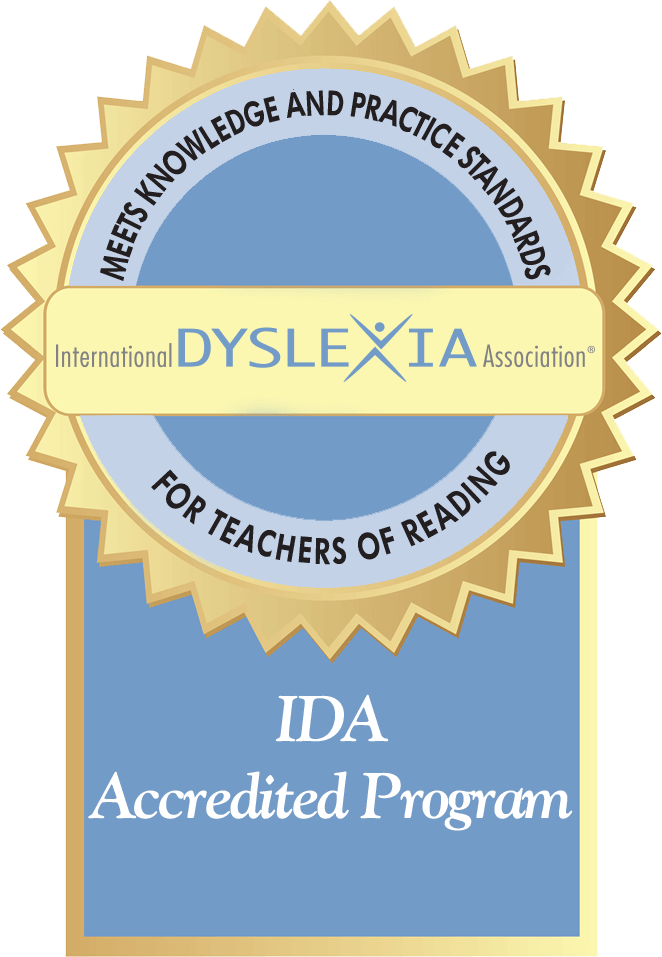
The International Dyslexia Association (IDA) has an accreditation program that rigorously reviews educator preparation programs based on an accreditation model that is uniquely aligned with IDA’s Knowledge and Practice Standards for Teachers of Reading (KPS). Alignment with the KPS provides programs with a comprehensive standards-based reading preparation framework to guide the development of their curriculum. Programs that meet these standards are awarded IDA Accreditation.
MGT partners with schools and districts to improve student outcomes through professional learning, coaching, and systems support—grounded in evidence-based practices and anchored in the Science of Reading.
Our Services and Products
Comprehensive Science of Reading courses and Connecting to the Classroom® offerings that move beyond theory—empowering educators to confidently apply evidence-based practices and implement high-leverage, evidence-based instructional strategies that improve literacy instruction and student outcomes.
Expand to show
In this course, participants will understand the research behind the Science of Reading that outlines the essential foundational skills on which proficient reading and writing are built. Participants will learn how the human brain learns to read, why some students struggle learning to read, how to identify those students, and how to effectively support them to become strong readers and writers.
This course defines Phonological Awareness for participants and increases understanding of how phonological and phonemic awareness are the foundation for reading and writing. Participants explore the continuum of phonological skills, and learn how to effectively plan, teach, and scaffold phonological awareness lessons in all tiers of instruction.
This course will explore the history of the English language and how the structure has evolved over time. The layers of the English language are discussed including letter-sound correspondences, letter and spelling patterns within words, syllables, meaningful parts of words (morphemes, roots, prefixes & suffixes), and how word origin can support accurate reading and writing. Participants will understand research-based components of effective reading and writing instruction, along with strategies and resources to scaffold student learning.

In this course, participants recognize the critical role of fluency as the bridge between word recognition and reading comprehension. Participants will understand how to create and teach students how to develop effortless fluency at the letter, word, phrase, sentence, and text level, so that cognitive resources are reserved for reading comprehension strategies. Participants will learn how to assess and effectively instruct student development of all levels of fluency.
This course develops participant understanding of research-based practices of direct and indirect vocabulary instruction. Participants explore the role of vocabulary as an essential building block of language comprehension that directly impacts reading comprehension. Various word learning strategies for teaching vocabulary words, including origin, morphology, and structure, are explored, and how to incorporate these effective strategies into classroom instruction.
In this course participants will learn, identify, and use the six syllable types in the English language to accurately decode multisyllabic words. Participants will learn to navigate the common word division patterns and rules for breaking down “tricky” multisyllabic words that are the cause of inaccurate or slow reading rates. They will learn and apply systematic routines for reading and spelling multisyllabic words and how to systematically teach the same routine to students.
This course illustrates the dual layers of English language, focusing on how morphemes (the meaningful parts of words) impact the spelling of words. Participants will learn how to explicitly teach students how to read and spell using prefixes, suffixes, and bases accurately and automatically. Participants will learn how to create and incorporate morphology lessons that empower students to use morphology to determine the meaning of unknown words.
This course delineates the meaning of “complex text” referred to in state and national curriculum standards and why it must be explicitly taught to students. Participants will understand the four components of text complexity and how text complexity is measured in both literature and informational texts. Effective instructional strategies and lesson planning steps for teaching complex text are explained that equip students to access and comprehend grade level texts.
In this course, participants will discuss how to lead students in developing the habit of Close Reading, which is the deep analysis and interpretation of text. Participants will explore how to design multiple experiences with text to enable students to effectively use critical thinking to make logical inferences while reading text. Participants will understand how to guide students to identify the author’s purpose and craft, synthesize and evaluate key information, identify, and analyze interconnected ideas, and effectively cite reasonings with evidence from texts.
- Strategic Consulting and Transformational
- Educational Leadership
Hands-On Coaching and Expert Modeling - Instructional Tools and Resources for Effective Educator Development
- Instructional Leadership Development
- MTSS-Aligned System Support
- Standards-Aligned Curriculum Design
Strategic Tools
Featured Team
Upcoming Events
SoR-ing to New Heights with MGT Webinars
Scaffolding with Grade-Level Texts
The Reading League (TRL) NC Chapter Webinar
The Power of Bridging Processes: How the Fluency Development Lesson Builds Pathways to Comprehension
April 23, 2026 · 7:00 – 8:00 PM ET
Virtual
Success Stories
Of all the turnaround candidates, MGT was the group we had confidence in to rely on to get the job done.
Suzanne Morey
Pueblo Public Schools
When MGT came in, they heard and they listened and they took the pieces that were already there in the administrative team and then they personalized professional learning opportunities for us … they took it to a whole different level.
Yvett Morales
Principal, Weslaco High School
EdThrive simplifies the preparation for your PLCs and it facilitates a real conversation where we are actually collaborating and working together.
5th Grade Teacher
My district has enjoyed a long-standing partnership with MGT through various grants, including RSSP, Strong Foundations, and ESF/TIL. Their unwavering support, guidance, and positive attitude have been invaluable throughout our collaborative projects. I am confident that I would not have been able to manage these grants successfully without MGT’s assistance. Their support has boosted my confidence and contributed to my daily successes!
Stephanie Reagle
Innovations Grant Coordinator, Stafford Municipal School District
Solutions to Transform Your School
Ready to Achieve
Extraordinary Outcomes?
Just fill out the form and an MGT leader will contact you shortly.